 |
|
|
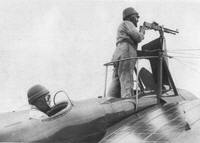 Welcome to our home page for War in the Air. This was our main theme in the Spring and early Summer of 2007 and since then we have rapidly increased our coverage of the topic.
Aerial Warfare was the Twentieth Century's unique contribution to the art of war. Ten years after the Wright Brothers' first flight in 1903, the airplane was ready to play an increasingly important role in the First World War. Fighter aces became public heroes in a war that was becoming increasingly anonymous on the ground.
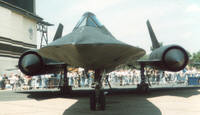
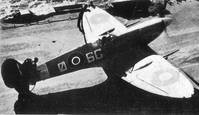 Military aircraft have developed at an incredible speed. It took only fifty years to get from the improvised war planes of 1914 to the 2,000 mph Lockheed SR-71 Blackbird. The Second World War saw hundreds of thousands of aircraft of hundreds of different types play a crucial role in the fighting, with some of the aircraft becoming icons in their own right.
 We now have 2,268 articles and 1,228,200 words, covering over one thousand military aircraft. Our first set of articles for our War in the Air theme also included our 1,000th article, and the Short Stirling took us over the one million words mark!
To find out what we already cover, visit our Subject Index for Aerial Warfare, look at our Book shop or check out our Links section.
The Blohm und Voss Bv 238 was the largest flying boat built during the Second World War, but only one prototype was completed and that was destroyed by Allied aircraft two months after its maiden flight.
The Blohm und Voss Bv 155 was a very high altitude fighter which began life as the Messerschmitt Me 155 carrier borne fighter, before changing role and then company, and eventually flying early in 1945 with very long wings, but never flew close to its theoretical high altitudes.
The Blohm und Voss Bv 40 was an armed glider that was designed to be towed into combat and used against the Allied heavy bomber streams that were becoming increasingly dangerous in 1943. A number of prototypes were built before the idea was abandoned.
The Arado Ar 240 was a twin engine monoplane developed to use a system of advanced remote controlled guns, but which never entered full production and saw limited use as a high speed reconnaissance aircraft.
The Arado Ar 232 was a radical design for a transport aircraft that was produced in small numbers, but never enough to be really significant.
The Arado Ar 231 was a small floatplane designed for use from U-boats, but which only reached the prototype stage.
The Arado Ar 199 was a light floatplane designed for use as a trainer, but that never entered service.
The Arado Ar 197 was designed as a carrier borne interceptor and light bomber, but was superseded by Messerschmitt designs well before the German aircraft carrier programme failed.
The Arado Ar 196 was a float plane that was used on the major warships of the German Navy and with coastal and sea reconnaissance units.
The Arado Ar 195 was a development of the Arado Ar 95L, designed for use from the aircraft carriers being planned for the German Navy in the 1930s.
The Arado Ar 95 was a biplane floatplane designed to replace the Heinkel He 60, but which was rejected for German service and instead sold on the export market.
The Arado Ar 68 was the last biplane fighter to see front-line service with the Luftwaffe, being replaced by the Messerschmitt Bf 109 before the start of the Second World War.
The Dornier Do 26 was a flying boat built for civil travel across the Atlantic but that was taken over by the Luftwaffe after the outbreak of the Second World War and used as a transport aircraft.
The Dornier Do 24 was a three engined parasol winged flying boat that was built for the Netherlands, but was mainly used by the Germans on air-sea rescue duties.
The Dornier Do 22 was a three seat reconnaissance and light attack floatplane that was sold to Greece, Latvia and Yugoslavia, and ended up being used in small numbers by Yugoslav exiles for the Allies and the Finnish Air Force.
The Dornier Do 23 was the last in a series of bombers that started with the Dornier Do P, and was produced in significant numbers, equipping Luftwaffe bomber units in the mid 1920s.
The Dornier Do 13 was a development of the Do 11, but was an unsuccessful design and only four were ever built.
The Dornier Do 11 was the first new bomber built for the Luftwaffe, although was mainly used as a training aircraft.
The Avro 504K was a development of the Avro 504J that had a universal engine mount capable of taking a wide range of different engines.
The Avro 504J was a two seat trainer powered by a 100hp Gnome Monosoupape engine and that replaced the Avro 504A as the RFC’s main trainer.
The Avro 504G was a two seat training aircraft, armed with forward firing Vickers guns and a rear mounted Lewis gun.
The Avro 504F was the designation given to Avro 504C 8603 after it was given a 75hp Rolls-Royce Hawk six cylinder in-line engine.
The Avro 504E was an experimental development of the RNAS’s Avro 504C given a more powerful engine to compensate for an increase in weight.
The Avro 504D was a single seat anti-Zeppelin aircraft built for the RFC in very small numbers.
The Avro 504C was the first single seat version of the Avro 504 and was built as an anti-Zeppelin and coastal reconnaissance aircraft.
The Avro 504B was the first version of the Avro 504 family to be designed specifically for the Admiralty, and introduced a number of changes that were later introduced on all members of the family.
The Avro 504A was the second version of the aircraft built for the RFC and was a stronger version of the original Avro 504.
The Avro 504 was the first version of what became the most numerous British military aircraft of the First World War, used as a training aircraft throughout the war and into the early 1930s.
The Avro 510 was a large two seat seaplane built for the 1914 Circuit of Britain Race, but purchased by the Admiralty after that race was cancelled due to the outbreak of war.
The Avro 508 was a two seat reconnaissance aircraft built for the RFC in December 1913 but that didn’t enter production.
The Avro 503 (Type H) was a larger but lighter development of the Avro 501 of which at least four were ordered, with three going to the Admiralty and one to the German Navy.
The Avro 501 was an early floatplane that performed well enough to be purchased by the Admiralty, and to lead to the development of the Avro 503 (Type H).
The Avro Type G was developed for the Military Aeroplane Competition of August 1912 and was the first cabin biplane in the world.
The Avro 500 (Type E) was the company’s first military aircraft and was designed in response to the Air Ministry’s first military aircraft specification.
The Blackburn Buccaneer was a high speed low level attack aircraft that remained in British service from 1962 until 1994, seeing combat during the 1991 Gulf War, nearly thirty years after first entering service.
The Blackburn F.3 (F.7/30) was an unusual looking biplane fighter designed to get the best performance out of the Rolls-Royce Goshawk engine, but which only reached the prototype stage.
The Blackburn Blackcock or Turcock was a single seat interceptor of the late 1920s of which one example was built for the Turkish government.
The Blackburn Triplane was an anti-Zeppelin fighter designed to carry a Davis two-pounder quick-fire recoilless gun, but which only reached the prototype stage.
The Blackburn Beverley was a large four engined transport aircraft that served with the RAF from 1956 to 1967, and was the largest aircraft to enter RAF service to that date.
The Blackburn Perth was the largest biplane flying boat to see service with the RAF, and replaced the Blackburn Iris with No.209 Squadron, but wasn’t as successful as the Iris and had a very short service life.
The Blackburn Kangaroo was a land based maritime reconnaissance aircraft that entered service in small numbers in 1918.
The Blackburn G.P. was a general purpose seaplane designed in 1915 and which didn’t enter production, but which did lead to the land based Blackburn Kangaroo.
The Blackburn T.B. was an unusual twin fuselage aircraft designed as an anti-Zeppelin interceptor, and which saw limited service in 1916.
The Blackburn Nautilus was a two seat carrier-borne fleet spotter and interceptor produced in 1929, but which only reached the prototype stage.
The Blackburn Cubaroo was a very large torpedo bomber designed in the 1920s for coastal defence but that only reached the prototype stage.
The Blackburn Iris was a large flying boat that served in small numbers with the RAF in the early 1930s, carrying out some impressive long range flights.
The Blackburn Lincock was a light weight fighter produced as a private venture by Blackburn and which attracted some interest but no orders.
The Blackburn Sydney was the first large monoplane flying boat to be produced in Britain, but only one prototype of the military version and one of the similar civilian Blackburn Nile were ever built.
The Blackburn Beagle was a day bomber, torpedo bomber and long range reconnaissance aircraft that only reached the prototype stage.
The Blackburn B-48 was an improved version of the Blackburn Firebrand single seat torpedo bomber, but only reached the prototype stage.
The Blackburn Blackburd was a torpedo bomber designed to be able to carry heavier torpedoes than the Sopwith Cuckoo, but that only reached the prototype stage and eventually lost out to the production of more Cuckoos.
The Blackburn Sprat was a small two seat biplane designed as an advanced trainer, but that never progressed beyond the prototype stage.
The Blackburn Airedale was a high wing monoplane designed to replace the almost new Blackburn R.1 Blackburn and Avro 555 Bison, but that only reached the prototype stage.
The Blackburn Blackburn was a reconnaissance and gunnery fire control aircraft that served with the Fleet Air Arm from the mid 1920s to the early 1930s, and was a generally successful design despite being a rather ugly aircraft.
The Blackburn B-88 (Y.B.1) was a turbo-prop powered version of the B-54 anti-submarine aircraft, but it lost out to the Fairey Gannet and never entered production.
The Blackburn B-54 (Y.A.5/ Y.A.7/ Y.A.8) was an anti-submarine aircraft that was superseded by the turbine powered Blackburn B-88 (Y.B.1).
The Blackburn B-20 was an inventive design for a flying boat where the planing bottom was carried below the main hull on the water and pulled up into it when in the air, giving it good performance on the water and in the air.
The Blackburn B-7 was a general purpose army co-operation aircraft that was designed to a 1931 specification that didn’t result in any production aircraft.
The Blackburn M.1/30 (B-3) was a two man carrier torpedo bomber that reached the prototype stage, and helped test out some of the features of the Blackburn Shark, which was ordered into production in significant numbers.
The Pfalz D.XV was the last, and probably the best, fighter design produced by Pfalz, but was about to reach the front when the war ended and thus never got a chance to prove itself.
The Pfalz D.XIV was a version of the Pfalz D.XII using a 200hp Benz engine, but offered little improvement over the earlier aircraft, so production was cancelled after only a handful had been completed.
The Pfalz D.XII was the last Pfalz fighter to enter production, and was similar in appearance to the more successful Fokker D.VII, but as with earlier Pfalz aircraft appeared later than its Fokker rival and was less effective.
The Pfalz D.VIII was one of a pair of Pfalz biplane fighters powered by the same Seimens-Halske engine, and was produced in small numbers during 1918.
The Pfalz D.VII was one of a pair of Pfalz biplane fighters powered by the same Seimens-Halske engine, and entered service in small numbers during 1918.
The Pfalz D.VI was a rotary powered biplane fighter that was approved for service in 1917 but never entered production.
The Pfalz D.III was the most successful Pfalz fighter of the First World War, and saw the Bavarian company move from being a minor manufacturer to producing aircraft that were normally only second to Fokker’s best designs.
The Pfalz Dr.I was a triplane fighter with a very impressive rate of climb, but it used an unreliable engine and by the time the first evaluation versions were ready in 1918 was slower than contemporary fighters, so never entered production.
The Pfalz E.VI was the final Pfalz monoplane to enter production, but it was probably only built to keep the Pfalz factory busy, and was only used as a training aircraft.
The Pfalz E.V was the only version of the series of Pfalz monoplanes to use an inline engine, but by the time it entered production in 1916 it was already obsolete, and only 20 were ever built.
The Pfalz E.IV was the third in a series of Pfalz monoplane fighters, but although it carried the most powerful engine it was outdated by the time it entered service in 1916 and was only produced in small numbers.
The Pfalz E.III was an armed version of the parasol wing Pfalz A.II, itself a licence built copy of the Morane-Saulnier Type L. Only a handful were produced and their time at the front was limited.
The Pfalz E.II was the second of their monoplane fighters, and was powered by a more powerful engine that the original Pfalz E.I.
The Pfalz E.I was the company’s first fighter aircraft, and was an armed version of the Morane-Saulnier Type H. However it entered service after the Fokker E.I, and wasn’t as good as that aircraft, so was only produced in small numbers.
The Pfalz Parasol was the first military aircraft to be produced by the Bavarian Pfalz company, and saw use as reconnaissance aircraft and improvised bombers early in the First World War, before becoming training aircraft.
The Grumman F11F Tiger was the first fighter capable of level supersonic flight to enter service with the US Navy, but suffered from an underpowered engine and was soon replaced by the Vought F8U-1 Crusader.
The Grumman JRF Goose was originally developed as a civil transport aircraft, but saw service in the US Navy, Coast Guard and in Britain and Canada as a utility transport, coastal patrol aircraft and navigation trainer.
The Grumman J4F Widgeon was a twin engine amphibian originally developed for the civilian market, but that was used as a patrol, anti-submarine and transport aircraft by the US Coast Guard and US Navy.
The Grumman J2F Duck was an amphibian aircraft that performed a wide range of rolls for the US Navy during the Second World War.
The Grumman JF was the company’s first amphibian aircraft, and served in a wide range of roles from shore bases and aircraft carriers during the Second World War.
The Grumman WF/ E-1 Tracer was an airborne early warning aircraft based on the S-2 Tracker and operated on US aircraft carriers from 1960 until it was replaced by the E-2 Hawkeye in 1976.
The Grumman TF/ C-1 Trader was a Carrier On-Board Delivery transport that served with the US Navy from 1955 until 1988, carrying small but important cargoes between US aircraft carriers.
The Grumman S2F/ S-2 Tracker was a carrier borne anti-submarine aircraft that served with the US Navy from 1954 until 1977, replacing a series of paired hunter/ killer aircraft.
The Grumman XP-50 Skyrocket was a land based version of the Grumman XF5F-1, a twin engined single seat naval fighter, both of which only reached the prototype stage.
The Grumman XP-65 was a twin engine fighter that was developed alongside the Navy’s F8F Tigercat, but that was cancelled early in 1942 before reaching the prototype stage.
The Grumman XF5F Skyrocket was a twin engined single seat naval fighter that only reached the prototype stage.
The Grumman F9F/ F-9 Cougar was a swept wing version of Grumman’s first jet fighter, the straight winged F9F Panther, and entered service too late to see combat in Korea.
The Grumman F9F/ F-9 Panther was Grumman’s first jet fighter, and the US Navy’s main fighter aircraft during the Korean War.
The Grumman AF Guardian was an anti-submarine warfare aircraft that was originally designed as a replacement for the Grumman Avenger and which served in small numbers in the Korean War.
The Grumman F3F was the company’s last biplane fighter produced for the US Navy and was the result of Grumman’s efforts to improving the flying characteristics of the F2F.
The Grumman F2F was the company’s first single seater, and was developed from the two-seat FF, which had been its first successful aircraft design.
The Grumman SF was a two man scout aircraft based on the similar Grumman FF-1 two seat fighter, and that was ordered in slightly larger numbers.
The Grumman FF was a two-man fighter that was the first in the series of Grumman fighters to serve with the US Navy, and that featured retractable landing gear and an enclosed cockpit, making it an advanced design for the time.
The Sopwith Buffalo was an armoured aircraft designed for ‘contact patrols’, low level reconnaissance missions over the enemy lines, that would probably have entered production if the First World War had continued into 1919.
The Sopwith Swallow was a parasol wing monoplane fighter designed for use on aircraft carriers, but it emerged just before the end of the First World War and only a single prototype was built
The Sopwith Scooter was a parasol wing monoplane that was used as a runabout by Harry Hawker, and was developed into the military Sopwith Swallow.
The Sopwith 8F.1 Snail was a small fighter developed in 1917-1918, with conventional and monocoque fuselages, but it was led down by its engine, and only two prototypes were built.
The Sopwith 5F.1 Dolphin was a heavily armed and generally successful single seat fighter that was in service throughout 1918, but that was partly let down by an unreliable engine and as a result only equipped four squadrons on the Western Front.
The Sopwith 3F.2 Hippo was an unsuccessful design for a two seat fighter that only reached the prototype stage.
The Sopwith 2F.1 Camel or Ship’s Camel was a naval version of the Sopwith F.1 Camel, that was intended for ship-borne use, but that was also used as a land based fighter by the RNAS and later by the RAF
The Sopwith F.1 Camel was probably the most famous British aircraft of the First World War and was an extremely agile if difficult to fly dogfighter that helped the British overcome a period of German dominance over the Western Front in 1917 then fought on to the end of the war, still holding its own against newer German designs.
The Sopwith 2FR.2 Bulldog was a design for a two-man fighter-reconnaissance aircraft that was produced in one bay and two bay versions, but that didn’t enter production.
The Sopwith T.1 Cuckoo was a potentially promising torpedo bomber that was left down by its Sunbeam Arab engine, and was only just entering service at the end of the First World War.
The Sopwith B.1 was a failed design for a single seat bomber that appears to be have been produced because of a misunderstanding about what type of aircraft the French wanted, and that performed too poorly to be considered for production.
The RWD 25 Sokol (Falcon) was a design for a light weight fighter which was to act as an operational trainer and an interceptor in emergencies.
The Bartel M.6 was a fighter trainer that had reached the prototype stage when the Samolot company went into insolvency, so never entered production.
The Bartel M.5 was a Polish intermediate trainer that was based on the earlier Bartel M.2, and entered production just before the Samolot company that had developed it went bankrupt.
The Bartel M.4 was a primary trainer designed to use a war surplus Le Rhone engine and which was produced in significant numbers, outliving the Samolot company that had developed it.
The Bartel M.2 (BM 2) was a biplane trainer that only reached the prototype stage, but that was followed by a series of related Bartel trainers that did enter production.
The RWD 22 was a twin float observation aircraft that was under development for the Polish Navy when the Germans invaded.
The RWD 17 was an aerobatic training aircraft that was ordered by both the Polish Navy and Army, but that hadn’t entered service when the Germans invaded in 1939.
The RWD 14 Czapla (Heron) was an observation aircraft that fought during the German invasion of Poland in 1939, suffering heavy losses, mainly from ground fire.
The RWD 8 was a parasol wing monoplane that was used both as a military trainer and by civilian flying clubs and was produced in larger numbers than any other Polish aircraft of the interwar period.
No.467 Squadron (RAAF) was a bomber squadron that served with Bomber Command from the start of 1943 to the end of the war.
The P.W.S.35 Ogar (Hound) was a training aircraft loosely based on the Bucker Bu 131 Jungmann but which had only reached the prototype stage when the Germans invaded Poland in 1939.
No.463 Squadron (RAAF) was a Lancaster squadron that served with Bomber Command from 1943 to 1945.
The P.W.S.33 Wyzel (Pointer) was a twin engined trainer produced to help Polish pilots train to use the advanced P.Z.L. P.38 Wilk.
No.461 Squadron (RAAF) was a maritime patrol squadron in Coastal Command that carried out patrols over the Western Approaches and Bay of Biscay from 1942 to the end of the war.
The P.W.S.26 was a basic and intermediate training aircraft that was produced in significant numbers in the late 1930s for the Polish air force, and that was the last member of a family descended from the P.W.S.12
No.459 Squadron (RAAF) was a maritime patrol and anti-shipping squadron that was based in the Mediterranean from 1942 until the end of the war.
The P.W.S.16 was an aerobatic and intermediate trainer based on the earlier P.W.S.12 and P.W.S.14 and that was produced after the company had gone bankrupt and been taken over by the Polish government.
No.458 Squadron (RAAF) was a bomber squadron that entered service with Bomber Command in October 1941, but soon moved to the Middle East, where it switched to maritime operations, carrying out anti-shipping patrols, anti-submarine patrols and attacks on coastal shipping and enemy ports.
The P.W.S.14 was an intermediate trainer that was produced in small numbers before work moved onto the improved P.W.S.16.
No.456 Squadron (RAAF) was a night fighter squadron that began as a defensive squadron over the Irish Sea, then flew intruder missions over France, defended the D-Day armies in the months before the invasion, took on the V-1 flying bombs, and ended the war supporting Bomber Command.
The P.W.S.12 was a Polish intermediate trainer that entered production in 1931, but that was completed as the improved P.W.S.14.
No.455 Squadron (RAAF) was formed as a night bomber squadron in RAF Bomber Command, but moved to Coastal Command in 1942 where it remained for the rest of the war, mainly operating as a strike squadron.
The P.W.S. 19 was a two-seat army reconnaissance aircraft based on the earlier P.W.S.1, and that came close to being ordered for the Polish Air Force before the prototype was destroyed in dive tests.
No.490 Squadron, RNZAF, was a flying boat squadron that was based at Jui, Sierra Leone from 1943 until the end of the Second World War.
The P.W.S.15 was a biplane version of the P.S.W.10 parasol fighter, but despite having superior performance it was never submitted for official examination, and the sole example was soon converted back into a P.S.W.10.
No.489 Squadron, RNZAF, was a UK based anti-shipping squadron that served with Coastal Command
The P.W.S.11 was a training aircraft similar in design to the P.W.S.10 fighter, but that didn’t enter production as the P.W.S.10 itself was only seen as an interim design which would soon be free to go to training units.
No.488 Squadron went through two incarnations during the Second World War. The first was as a fighter squadron that was caught up the fall of Singapore and had to retreat to Sumatra, then Java and finally to Australia. The second incarnation was as a UK based night fighter squadron, focusing mainly on defensive missions.
The P.W.S.10 was the first Polish designed fighter to enter production, but was always intended to be an interim design before the P.Z.L. P.7 could enter service.
No.487 Squadron, RNZAF, began as a day bomber squadron but spent most of the war flying night intruder missions.
The P.W.S.6 was an improved version of the earlier P.W.S.5, equipped with Handley Page leading edge slots, but despite being a promising design it only reached the prototype stage.
No.486 Squadron, RNZAF, began its existence as a night-fighter unit, but after the failure of the Turbinlite experiment it became a standard fighter squadron, taking part in offensive sweeps and the campaign against the V-1 Flying Bomb.
No.485 Squadron, RNZAF, was a UK based fighter squadron that took part in the offensive sweeps over France, supported the D-Day Landings and spent most of the rest of the war based on the Continent.
The P.W.S.5 was originally designed as a two-seat observation and liaison aircraft, but entered service in small numbers as a two-seat trainer, the first in a line of P.W.S. training aircraft.
No.41 Transport Squadron (RNZAF) was the second transport squadron formed with the RNZAF. It was used to provide a regular link between New Zealand and Guadalcanal, originally using aircraft inherited from No.40 Squadron.
The P.W.S.1 was a design for a two seat reconnaissance fighter that never got past the prototype stage.
No.40 Squadron (RNZAF) was the first transport squadron formed in the RNZAF and provided regular transport links between New Zealand and the RNZAF's bases out as far as Guadalcanal.
The L.W.S.5 Zubr was a floatplane version of the disastrous L.W.S.4, and had to be cancelled while the prototype was under construction after an investigation into the crash of the original prototype of the L.W.S.4 meant that the structure had to be strengthened, making the floatplane version too heavy to carry a useful payload.
No.31 Dive-Bomber Squadron, RNZAF, was a short-lived squadron that spent two months fighting on Bougainville in May-July 1944 before being disbanded as the role of the RNZAF changed.
No.30 Dive Bomber Squadron, RNZAF, was a short-lived unit that took part in the fighting on Bougainville in March 1944 and the campaign against Rabaul, before being disbanded in May 1944.
No.26 Fighter Squadron, RNZAF, was a short-lived unit that took part in the Australian offensive on Bougainville during its only tour of duty in the combat zone.
No.25 Squadron, RNZAF, went through two incarnations during the Second World War. The first was as a dive-bomber squadron that took part in the fighting on Bougainville in March 1944 and the campaign against Rabaul. The second was as a fighter squadron that operated out of the New Zealand bases at Emirau and Los Negros, watching the last few Japanese strongholds in New Ireland and the surrounding area.
The L.W.S.4/ L.W.S.6 Zubr (Bison) was an unsuccessful design for a medium bomber that was produced in limited numbers as an operational trainer and as backup in case the more advanced P.Z.L P.37 Los failed, but that was unable to operate from temporary airfields and thus made no contribution to the fighting in 1939.
No.24 Fighter Squadron, RNZAF, took part in the Australian offensive on Bougainville late in 1944 and in the last few months of the war as well as taking part in the long campaign to neutralise Rabaul.
The Lublin R-XX was a large twin engined floatplane that was about to enter production for the Polish Navy when the Lublin company went bankrupt, and thus never got past the prototype stage.
No.23 Fighter Squadron, RNZAF, took part in the later stages of the campaign on Bougainville, was the first New Zealand squadron to move to Los Negros (the most westerly Pacific base used by the RNZAF) and took part in the campaign to neutralise Rabaul.
The Lublin R-XVIII was the designation for a series of multi-engined bomber designs of the early 1930s, none of which entered production.
No.22 Fighter Squadron, RNZAF, took part in the campaign to neutralise Kavieng and the Australian offensive on Bougainville in late 1944 and 1945.
The Lublin R-XVI was an air ambulance that was produced in small numbers in the mid 1930s and that was still in Polish service when the Germans invaded in 1939.
No.443 Squadron (RCAF) was a Canadian fighter squadron that served with 2nd Tactical Air Force from 13 April 1944 until the end of the war in Europe, supporting the Allied campaign in north-western Europe.
The Lublin R-XIX was an experimental aircraft that saw a ‘V’ tail installed on a R-XIII liaison aircraft with successful but unappreciated results.
No.442 Squadron (RCAF) was a Canadian fighter squadron that served with 2nd Tactical Air Force during the campaign in north-western Europe, before ending the war on escort duty for Bomber Command's renewed daylight raids.
The Lublin R-XIV was a training aircraft that was developed from the earlier R-X observation and liaison aircraft.
No.441 Squadron (RCAF) was a Canadian fighter squadron that had a varied career, supporting the D-Day landings, escorting Bomber Command's daylight raids over Germany and providing fighter defences for Scapa Flow.
The Lublin R-XIII was the main observation aircraft in Polish service at the start of the Second World War, but only because its replacements had failed to enter service when planned.
No.440 Squadron (RCAF) was a Canadian fighter squadron that served with the 2nd Tactical Air Force, supporting the D-Day landings and the campaign in north-western Europe, ending the war in Germany.
The Lublin R-XXII was a design for a medium sized coastal protection, sea patrol and torpedo bomber aircraft, based on the earlier Lublin R-VIIIbis and which reached quite an advanced stage before the project was abandoned.
No.439 Squadron (RCAF) was a Canadian fighter squadron that served with 2nd Tactical Air Force, and supported the D-Day landings and the campaign in north-western Europe, ending the war in Germany.
The Lublin R-X was a observation and liaison aircraft that reached the pre-production stage, and which was the basis of the later R-XIII, which was produced in large numbers.
No.438 Squadron (RCAF) was a Canadian fighter squadron that served with the 2nd Tactical Air Force, supporting the Allied campaign in north-western Europe, ending the war in Germany.
The Lublin R-VIII was a reconnaissance bomber that was one of the first military aircraft designed by the Polish aircraft industry, and which entered service in small numbers with the Polish Navy as a floatplane.
No.437 Squadron (RCAF) was a Canadian transport squadron that took part in Operation Market Garden and the airborne crossing of the Rhine as well as flying supplies and troops to Europe.
The P.Z.L. P.50 Jastrzab (Hawk) was a radial engine powered fighter that was let down by the lack of a suitable engine, and that had been cancelled a few months before the German invasion of Poland.
No.436 Squadron (RCAF) was a Canadian transport squadron that flew supplies to the Fourteenth Army during the reconquest of Burma, then operated with Transport Command in the UK after the end of the war.
The P.Z.L. P.49 Mis (Teddy Bear) was a more advanced version of the P.37 twin engined bomber, but the prototype hadn’t been completed when the Germans invaded and all work on the type was destroyed before it could fall into their hands.
No.435 Squadron (RCAF) was a Canadian transport squadron that operated over Burma, supporting the 14th Army during the reconquest of Burma.
The P.Z.L. P.48 Lampart (Leopard) was a more advanced version of the P.38 Wilk multi-purpose ground attack and escort fighter, but the prototypes hadn’t been completed when the Germans invaded Poland in September 1939.
No.430 Squadron (RCAF) was a Canadian fighter squadron that was used for ground attack and tactical reconnaissance missions from 1943 to the end of the war.
The P.Z.L. P.38 Wilk (Wolf) was a design for a combined fighter, attack aircraft, and dive bomber that only reached the prototype stage before the German invasion of Poland in 1939.
No.423 Squadron (RCAF) was a Canadian squadron that carried out anti-submarine patrols for most of its existence, before briefly becoming a transport unit at the end of the war.
The P.Z.L. P.37 Los (Elk) was a modern twin engined medium bomber that was the most advanced aircraft in Polish service in 1939, but that was only produced in tiny numbers and equipped four squadrons during the German invasion of 1939.
No.422 Squadron, RCAF, was a Canadian squadron that served with Coastal Command and mainly operated the Short Sunderland over the western approaches, sinking U-625 in 1944 as well as briefly using the Catalina to fly supplies to the Soviet Union.
The P.Z.L. P.45 Sokol (Falcon) was a lightweight fighter designed to replace or supplement the increasingly outdated P.Z.L. P.11 that had almost reached the prototype stage when the Germans invaded Poland in 1939.
No.421 Squadron, RCAF, was a Canadian fighter squadron that began operations on defensive patrols over South Wales and the south-west, then moved to the south-east to escort bomber missions over France. It then joined 2nd Tactical Air Force and spent the rest of the war operating over the Continent.
The P.Z.L. P.46 Sum (Sheat-fish) was to have been a more advanced version of the P.23 light bomber and reconnaissance aircraft, but it hadn’t entered production by the time the Germans invaded Poland in 1939.
No.418 Squadron (RCAF) was a Canadian squadron that operated the Boston as a night intruder, then the Mosquito on day intruder, bomber escort and anti V-1 duties, ending the war with 2nd Tactical Air Force.
The P.Z.L. P.43 Karas (Crucian-carp) was a more powerful version of the Polish P.23 light bomber and reconnaissance aircraft, developed in response to a Bulgarian order.
No.417 Squadron (RCAF) was a Canadian fighter squadron that served in North Africa from 1942-43, the took part in the invasions of Sicily and Italy, ending the war as a ground attack unit.
The P.Z.L. P.42 was a single development aircraft used to help with the design of the P.46 Sum (Sheat-fish), the planned replacement for the P.23 Karas.
No.416 Squadron (RCAF) was a Canadian fighter squadron that was initially used to protect coastal shipping before taking part in offensive sweeps over France, ground attack and escort missions. It supported the D-Day landings then moved to Normandy, from where it carried out armed reconnaissance sweeps, finding and attacking German targets.
The P.Z.L. P.23 Karas (Crucian-carp) was a reconnaissance aircraft and light bomber that performed well in the bomber role after the German invasion in 1939, before heavy losses reduced its effectiveness.
No.414 Squadron (RCAF) was a Canadian squadron that operated the Mustang then the Spitfire, mainly in the reconnaissance and ground attack roles, eventually operating as far afield as over Germany.
The P.Z.L. P.24 was a refined version of the P.11 designed to use engines other than Bristol radials, so they could be exported without causing problems with the licensing agreement for those engines.
No.413 Squadron, RCAF, was a Canadian Catalina squadron that operated from Scotland for part of 1941 before moving to Ceylon in 1942, entering service there just before the Japanese raid into the Indian ocean. It spent most of the rest of the war on anti-submarine duties across the Indian ocean before its crews moved back to the UK to reform as a short lived bomber squadron
The P.Z.L. P.11 was the most important Polish fighter aircraft when the Germans invaded in 1939, but although it had been an advanced design when it was first introduced, by then it was outdated and outclassed.
No.412 Squadron (RCAF) was a Canadian fighter squadron that took part in the failed attack on Dieppe, then joined Second Tactical Air Force and supported the D-Day landings and the campaign in north-western Europe.
No.411 Squadron (RCAF) was a Canadian Spitfire squadron that served with Fighter Command then the Second Tactical Air Force, and spent most of its time carrying out offensive sweeps, either over occupied Europe or during the campaign in North-Western Europe in 1944-45.
The P.Z.L. 18 was a design for a heavy torpedo-bomber that never got beyond the design stage.
The P.Z.L. P.8 was a design for an improved inline engine powered of Zygmunt Pulawski’s gull wing fighters, but which never progressed beyond the prototype stage, and was abandoned in favour of the inline powered P.11.
No.409 Squadron (RCAF) was a Canadian night fighter squadron that took part in the defence of Britain in 1941-44, then supported the D-Day landings, flew intruder missions over France and took part in the campaign against the V-1 flying bomb.
The P.Z.L. 3 was a Polish design for a heavy bomber that never got past the design stage, but that influenced the very similar Potez 41 in France, which did reach the prototype stage.
No.407 Squadron, RCAF, was a Canadian squadron that served with Coastal Command from 1941-45, performing a mix of anti-submarine and anti-shipping missions, as well as taking part in the attempt to stop the 'Channel Dash' and the D-Day landings.
The P.Z.L. L.2 was an observation and liaison aircraft designed for the Polish Air Force but that was only produced in small numbers after losing out to a Lublin design.
No.406 Squadron, RCAF, was a Canadian night fighter squadron that was formed in the UK and after an early spell of defensive duties was mainly used as an intruder squadron and for low level sorties over France and later Germany.
The P.Z.L. P.7 was the first domestically designed fighter to enter Polish service and allowed the Polish air force to be the first to convert to an all metal monoplane fighter.
The P.Z.L. P.6 was one of two radial powered developments of the P.1 fighter that were produced at the same time in 1929-30, but lost out to the second model, the high altitude P.Z.L. P.7
No.404 Squadron, RCAF, was a long range fighter and anti shipping squadron that served with RAF Coastal Command from 1941-45.
The P.Z.L. P.1 of 1929 was the first Polish designed fighter aircraft, and was the first in a line of fighters that would still be in front line service a decade later, at the outbreak of the Second World War.
No.403 Squadron, RCAF, was a fighter squadron that was the first Canadian squadron to be formed overseas during the Second World War, and that took part in the air offensive over France, joined Second Air Force and supported the D-Day landings then moved to Europe to support the campaign in North-western Europe.
No.402 Squadron, RCAF, was a fighter squadron that was mainly used on offensive duties, including the raid on Dieppe and supporting the D-Day lands, as well as taking part in the campaign against the V-1 Flying Bomb.
The Curtiss SC Seahawk was the last fixed wing scouting aircraft produced for service on the US Navy’s battleships and cruisers, and entered service late in 1944.
No.401 Squadron, RCAF, was a fighter squadron that took part in bomber escort and fighter sweeps before joining 2nd Tactical Air Force to support the D-Day landings and the campaign in north-western Europe.
The Curtiss SO3C Seamew/ Seagull was an unsuccessful attempt to replace the Curtiss SOC Seagull biplane spotter plane, and after a brief period of front line service in 1942-43 was withdrawn, and in some cases replaced with its predecessor.
No.400 Squadron, RCAF, began the war as am army co-operation squadron, before becoming a reconnaissance squadron, supporting the D-Day landings and the campaign in north-western Europe
The Curtiss SOC Seagull was a biplane scout-observation aircraft that operated from US battleships and cruisers throughout the Second World War, actually outliving two newer aircraft that had been designed to replace it.
No.162 Squadron (RCAF) was a Canadian flying boat squadron that was formed on the Canadian east coast in 1942 as a long range anti-submarine warfare squadron, and that spent most of 1944 and the first half of 1945 operating with RAF Coastal Command in Iceland and Scotland, where it was credited with sinking five U-boats and a share in a sixth.
The Curtiss XBT2C was a one or two seat torpedo and dive bomber developed from the SB2C Helldiver, but which only reached the prototype stage.
No.112 Squadron, RCAF, was an army co-operation squadron that moved to Britain in the summer of 1940 and was largely engaged in training, before becoming No.2 Squadron, RCAF in December 1940.
The Curtiss XBTC was a single seat torpedo and dive bomber that entered development in 1942 but didn’t make its maiden flight until 1945, and that lost out to more modern Douglas and Martin designs.
No.2 Squadron, RCAF, was an army co-operation squadron in the pre-war Permanent Force of the RCAF that was used to reinforce No.110 Squadron, the first Canadian squadron to move to Britain after the outbreak of the Second World War. In December 1940 No.112 Squadron, which was also in Britain, was renumbered as No.2, and flew convoy escort duties along the east coast. It was renumbered as No.402 Squadron in March 1941.
The Curtiss CT was a twin engined torpedo bomber, produced by Curtiss to a Navy design but that never progressed beyond the prototype stage.
No.110 Squadron, RCAF, was a Canadian army co-operation squadron that moved to Britain in 1939 and spent the next year training in army co-operation duties, before being renumbered as No.400 Squadron in March 1941.
No.1 Squadron, RCAF, was part of Canada's pre-war Permanant Force, and moved to Britain early in the Second World War, where it fought in the Battle of Britain, before being renumbered as No.401 Squadron in March 1941.
The Curtis-Wright C-113 Commando was an unsuccessful test bed for a new General Electric turbo-prop engine, and was written off after an ground accident early in its test career.
The Curtiss R5C Commando was the US Navy designation for the C-46A Commando, and was used by the US Marine Corps in the Pacific.
The Curtiss NC (Navy-Curtiss) was a flying boat originally designed in 1917 to be able to cross the Atlantic to reach the war zone, but that became most famous for making the first successful trans-Atlantic flight in May 1919, a few months before Alcock and Brown’s more famous first non-stop flight.
Operation Bodenplatte (1 January 1945) was a large Luftwaffe attack on Allied airfields in Belgium, Holland and France in which a large number of Allied aircraft were destroyed on the ground, but the Luftwaffe lost a large number of irreplaceable veteran pilots, a blow from which its fighter force never recovered.
The Curtiss HS-3 was an improved version of the HS-1 and HS-2 patrol flying boats, but only six were built before development stopped after the end of the First World War.
The Curtiss HS-2L was an improved version of the HS-1 coastal patrol flying boat that could carry a heavier payload, making it more suitable for use against submarines.
The Curtiss HS-1 was a single engined flying boat that was used as a coastal patrol aircraft in American and French waters, and was one of the most significant American designed combat aircraft of the First World War.
The Felixstowe/ Porte Baby was a three engined flying boat that was developed as an alternative to the Curtiss H-4 ‘Small America’, but that was only produced in small numbers after the success of the Felixstowe F.2A.
The Naval Aircraft Factory PN was the designation for a series of closely related flying boats that were developed from the Curtiss F-5L, an American version of the British Felixstowe F.5, which was in turn the final member of a series of flying boats developed from the earlier Curtiss H-4. The last members of the PN family didn’t retire from US service until 1944, extending the life of the Curtiss H and Felixstowe F families across both World Wars!
The Navy Aircraft Factory/ Curtiss F-5L was an American version of the Felixstowe F.5, which was the final member of a family of Felixstowe boats developed from the Curtiss H-4, and which became the standard US Navy patrol flying boat during the 1920s.
The Felixstowe F.5 was the last in a series of flying boats developed by John Porte based on earlier Curtiss boats, and served with the RAF after the First World war and entered production in American as the Curtiss F-5L.
The Felixstowe F.4 Fury was the last flying boat designed by John Porte, and was a massive triplane flying boat that only reached the prototype stage.
The Felixstowe F.3 was the most numerous of the British Felixstowe flying boats, and had a wider wingspan and could carry a heavier payload than the earlier F.2A, although at the cost of reduced agility.
The Felixstowe F.2 was an improved version of the Curtiss H-12 ‘Large America’, produced in Britain by fitting the Curtiss wings to a new hull that had been developed in an attempt to improve the earlier Curtiss H-4 ‘Small America’.
The Felixstowe F.1 was the first in a series of flying boats created by Commander John Porte of the RNAS, and was produced by fitting the wings from a Curtiss H-4 flying boat to a new hull, and was considered to be a great improvement over the original.
The Curtiss H-16 'Large America' was a biplane flying boat that was probably the Curtiss version of the Felixstowe F.2A, and was definitely an improved version of the H-12, which was itself an enlarged version of the H-4 ‘Small America’
The Curtiss H-12 ‘Large America’ was a larger development of the Curtiss H-4 that was developed in response to RNAS experience with the H-4, and that served with the US Navy and RNAS.
The Curtiss H-4 ‘Small America’ was the production version of the earlier H-1 America, and was produced for the British RNAS after the outbreak of the First World War.
The Curtiss H-1 'America' was a long range biplane seaplane, originally designed to fly across the Atlantic, and that became the basis of the wartime H-4, H-12 and H-16 in the US and the British Felixstowe F boats.
The Curtiss MF was a single seat flying boat introduced to replace the older Model F, and that saw some service after the end of the First World War.
The Curtiss Model F was an early single engine flying boat that saw extensive service as a US training aircraft during the First World War.
The Curtiss R-9 was a twin float plane bomber that was based on the earlier Curtiss R-6, but with the pilot and observer’s positions reversed.
The Curtiss R-6 was a twin float observation plane that was a more powerful version of the earlier R-3, and that was the first US Navy aircraft to see service overseas.
The Curtiss R-4 was an improved version of the Curtiss R-2 observation aircraft, and was ordered in larger numbers by the US Army in 1916.
The Curtiss R-3 was a twin float version of the Curtiss R-2 observation aircraft, and although only two were completed, it was followed by the more numerous R-6 and R-9.
The Curtiss R-2 was a two seat observation aircraft that served with the US Army, and in larger numbers with the RFC, and that was essentially an enlarged version of the Curtiss Model N.
The Curtiss-Wright C-76 Caravan was a wooden cargo aircraft designed in case the United States ran short of light alloys as military production accelerated after the US entry into the war.
The Curtiss C-55 was the designation given to the prototype of the Curtiss Model CW-20/ C-46, after it was given a new tail and purchased by the USAAF.
The Curtiss C-46 Commando was one of the most important US transport aircraft of the Second World War, and survived to see service in Korea and Vietnam.
The Curtiss C-30/ R4C-1 was a transport version of the Curtiss Condor II biplane transport aircraft, a rather outdated aircraft when it first appeared in 1933.
The Curtiss XC-10 was a modified version of the Curtiss Robin three seat cabin monoplane that was used for experiments with radio controlled aircraft.
The Curtiss PN-1 was an experimental night fighter of 1921 that didn’t live up to expectations.
The Curtiss Twin JN was a twin engined aircraft based on the famous JN-4 Jenny, produced in small numbers as an observation type.
The Curtiss JNS was the designation given to those JN-4Hs and JN-6Hs that were reconditioned after the First World War, eliminating the differences between the two types.
The Curtiss JN-6 was an improved version of the Curtiss JN-4H, mainly distinguished by the use of ailerons on both wings.
The designation Curtiss JN-5 was given to two different aircraft – first to what became known as the Twin JN and then to a single prototype of an improved model of the Jenny that never entered production.
The Curtiss JN-4Can ‘Canuck’ was an improved version of the Curtiss JN-3 that was developed independently in Canada, and constructed at the same time as the American Curtiss JN-4.
The Curtiss JN-4 was the main production version of the Curtiss Jenny, and was the most important American primary trainer during the First World War, and one of the main aircraft used by the barnstormers of the early 1920s.
The Curtiss JN-3 was the first version of the famous Curtiss Jenny to be produced in large numbers, mainly as a trainer for the RNAS. Two were also purchased by the US Army, but both were lost during the expedition to Mexico in 1916.
The Curtiss JN-2 was the first version of the famous Curtiss Jenny, and was produced in small numbers for the US Army. It wasn’t a great success and within a year the surviving aircraft had been updated to the JN-3 standard.
The Curtiss Jenny (Model JN) was the most important American primary trainer of the First World War, and played a major role in the development of civil aviation after the end of the war.
The Curtiss Model N was the company’s second successful tractor land plane, and was later developed into the N-9 float plane trainer as well as providing some features for the famous Curtiss JN ‘Jenny’.
The Curtiss Model J was the company’s first successful tractor land plane, and became the basis of the famous Curtiss JN ‘Jenny’, the main American training aircraft of the First World War.
The Curtiss SNC Falcon/ Model CW-22 was a basic trainer and light attack aircraft that saw combat against the Japanese with the Dutch, but that was only used as a trainer by the US Navy.
The Curtiss-Wright CW-21 was a lightweight export fighter that was purchased in small numbers by the Chinese and Dutch, and that saw limited combat during the defence of the Dutch East Indies in 1942.
The Curtiss-Wright CW-19 began life as a civilian cabin cruiser but soon became a light military aircraft , and the basis of the CW-21 Demon fighter and CW-22 / SNC-1 Falcon light attack and trainer.
The Curtiss XP-87/ XF-87 Blackhawk was the company’s first all-jet aircraft, and was briefly ordered into production, before being cancelled in favour of the Northrop F-89 Scorpion.
The Curtiss XP-71 was a design for a very heavy escort fighter, designed to support long range bombers. Two prototypes were ordered, but the project was cancelled before either of them had been completed
The Curtiss XP-62 was the heaviest American single-seat fighter to fly during the Second World War, but was underpowered and never progressed beyond the prototype stage.
The Curtiss XP-55 Ascender was an unusual tail first fighter that reached the prototype stage, but that proved to be inferior to more conventional fighter designs.
The Beechcraft L-23/ U-8 Seminole was a general utility aircraft that remained in US Army service for four decades, from the early 1950s to the early 1990s.
The Aeronca L-16 Champion was a post-war development of the L-3 Grasshopper, originally intended for use with the National Guard but forced into front line service during the Korean War.
The Boeing L-15 Scout was an advanced liaison aircraft that used the same basic layout as the wartime ‘Grasshopper’ liaison aircraft, but in a much more radical form.
The Stinson/ Convair L-13 was a post-war liaison aircraft that was designed to replace the L-5 Sentinel and that entered service just after the end of the Second World War.
The Interstate O-63/ L-6 Grasshopper was a potentially promising light liaison aircraft that failed to live up to expectations, and was produced in significantly smaller numbers than the similar Taylorcraft L-2, Aeronca L-3 or Piper L-4.
The Stinson O-54 was the designation given to six Stinson Voyagers ordered for evaluation by the USAAC. More aircraft were ordered during the Second World War, and others taken over from civilian owners, becoming the L-9, and the basic design became the basis of the very successful Stinson L-5 Sentinel.
The Curtiss O-52 Owl was a large, advanced two-man observation aircraft that had been made obsolete by the nature of the fighting in the Low Countries and France in 1940, and mainly saw use as a trainer.
The Ryan O-51 Dragonfly was an observation aircraft developed alongside the Stinson O-49/ L-1 Vigilant, but that only ever reached the prototype stage.
The Bellanca O-50 was an observation aircraft developed alongside the Stinson O-49/ L-1 Vigilant, but that only ever reached the prototype stage.
The North American O-47 was designed as a corps and division observation aircraft, but ended up serving as a trainer and target tug during the Second World War.
The Martin YO-45 was a temporary designation given to a Martin YB-10 while it was being evaluated as a high speed reconnaissance aircraft.
The Fokker O-27 was a two engine observation that was produced in small numbers and saw front line service with the USAAC in the early 1930s.
The Thomas-Morse O-41 was a version of the successful O-19 observation aircraft that was given sesquiplane wings and a Curtiss Conqueror engine, but failed in two attempts to win a USAAC contract, and was eventually sold to Republican Spain, although probably got no further than Mexico.
The Thomas-Morse O-23 was a version of the successful O-19 observation aircraft that was powered by a Curtiss Conqueror engine, making it the first member of the O-19 family to be powered by an inline engine since the original O-6 prototypes.
The Thomas-Morse O-33 was a version of the successful O-19 observation aircraft that was powered by a Curtiss Conqueror engine and given a revised tail.
The Thomas-Morse O-21 was a version of the successful Thomas Morse O-19 observation aircraft that was powered by a Curtiss Chieftain engine then by a Wright Cyclone.
The Thomas-Morse O-20 was a version of the successful O-19 observation aircraft that was powered by a Pratt & Whitney Hornet engine.
The Thomas-Morse O-19 was a two-man observation biplane loosely based on the Douglas O-2, but with an all metal structure. 171 production aircraft were ordered, and it became one of the standard US observation types at the start of the 1930s.
The Thomas Morse O-6 was an all-metal version of the Douglas O-2, one of the main American observation aircraft of the mid 1920s.
The Stinson O-62/ L-5 Sentinel was a larger and more capable liaison aircraft, which operated alongside the L-2/ L-3 and L-4 Grasshoppers, although needed more complex support than the lighter aircraft.
The Piper O-59/ L-4 Grasshopper was the most successful of three models of commercial light aircraft that served as liaison and artillery spotter aircraft for the USAAF, filling a gap left by the slow development of the Stinson O-49/L-1 Vigilant
The Aeronca O-58/ L-3 Grasshopper was one of three models of commercial light aircraft that served as liaison and artillery spotter aircraft for the USAAF, filling a gap left by the slow development of the Stinson O-49/L-1 Vigilant
The Taylorcraft O-57/ L-2 Grasshopper was one of three models of commercial light aircraft that served as liaison and artillery spotter aircraft for the USAAF, filling a gap left by the slow development of the Stinson O-49/L-1 Vigilant
The Stinson O-49/ L1 Vigilant was the first slow flying liaison aircraft to be ordered by the USAAC, but turned out to be too large and too expensive for the role, which was eventually carried out by a variety of military versions of civilian light aircraft
The Focke-Wulf Fw 190S was the designation given to a small number of dedicated two-man trainers produced to help convert pilots from two-seat bombers to the single seater Fw 190.
The Focke Wulf Fw 190G was a long range fighter bomber, based on the Fw 190A and originally produced with dedicated racks for fuel drop tanks under the wings.
The Focke Wulf Fw 190F was an armoured ground attack version of the aircraft, produced to replace the obsolete Ju 87 Stuka.
The Focke-Wulf Fw 190E may have been a designation for a dedicated reconnaissance version of the aircraft, but none were produced under that designation.
The Focke-Wulf Fw 190D was a high altitude version of the aircraft, powered by an inline engine hidden behind an extended version of the normal fuselage, making it look like a radial powered aircraft.
The Focke Wulf Fw 190C would have been powered by the Daimler-Benz DB 603 engine, but it never got past the development stage.
The Focke-Wulf Fw 190A was the most important fighter version of the aircraft, and was one of the best fighters in the world when it first entered service in 1941-42.
The Focke-Wulf Fw 190 was designed in response for a request for a ‘back-up’ to the Messerschmitt Bf 109, and went on to be one of the most important German military aircraft of the Second World War, with around 20,000 produced.
The Focke-Wulf Ta 152S was a planned two-man tandem trainer version of the Ta 152, which was ordered into production but never delivered.
The Focke-Wulf Ta 153 was one of Kurt Tank’s early designs for a replacement for the Fw 190, and a partial prototype was constructed late in 1943, before the entire programme was cancelled for the second time.
The Focke-Wulf Ta 152H was designed as a high altitude version of the standard Ta 152, but as a result of a series of poor decisions by the German Air Ministry it became the only version of the aircraft to actually enter combat, and only in tiny numbers and too late to have any impact on the course of the war.
The Focke-Wulf Ta 152E was a reconnaissance version of the Ta 152, and was on the verge of entering production at the end of the war.
The Focke-Wulf Ta 152C was the third attempt to produce a standard version of the Ta 152, and reached the prototype stage but too late in the war to actually enter production
The Focke-Wulf Ta 152B was the original design for a version of the Ta 152 optimised for higher altitudes, but suffered from problems with its Jumo 213E engine, and never got beyond the prototype stage. However a modified ‘Destroyer’ version, the B-5, did reach the prototype stage late in the war.
The Focke-Wulf Ta 152A was the original design for the standard version of the Ta 152, but the project was cancelled just as it was about to go into production.
The Focke-Wulf Ta 152 was the final evolution of the Fw 190, and entered combat very late in the war as the high altitude Ta 152H, which was only available in tiny numbers and proved to be an impressive but unreliable fighter.
The Martin T4M was a version of the earlier T3M torpedo bomber, powered by a Pratt & Whitney Hornet engine.
The Martin RM-1/ C-3 was the designation given to two Martin 4-0-4 airliners that served with the US Coast Guard and then the US Navy.
The Martin P6M SeaMaster was an advanced jet powered flying boat that was ordered into production, but only appeared in small numbers before the project was cancelled.
The Martin AM Mauler was a single seat carrier based attack aircraft, designed to replace the multi-seat SB and TB types that dominated during the Second World War.
The Martin XB-33 was the designation given to two different designs for high altitude bombers, neither of which entered production.
The Martin PB2M/ JRM Mars was the largest flying boat to enter service with the US Navy, although only a handful were completed for use as a transport aircraft.
The Martin M-130 was a massive flying boat produced for the trans-Pacific route. Only three were built, and two were taken into US Naval service in 1942.
The Martin XB-48 was an early American jet bomber that reached the prototype stage, but didn’t enter production.
The Martin XB-51 was a three engine jet ground attack aircraft that reached the prototype stage but didn’t enter production.
The Martin P4M Mercator was a long range reconnaissance aircraft, powered by a mix of piston and jet engines, and that saw service as an ECM aircraft in the 1950s.
The Martin P5M (P-5) Marlin was developed from the successful PBM Mariner, and was the last operational flying boat to serve with the US Navy.
The Martin XB-13 was the designation given to a version of the Martin B-10 that would have been powered by the Hornet B radial engine.
The Martin XB-14 was an experimental version of the Martin B-10, produced to test out the new Twin Wasp engines.
The 507th Fighter Group (USAAF) was a P-47 group that operated as a ground attack unit during the last few months of the war against Japan.
The 508th Fighter Group (USAAF) was a P-47 group that trained as a long range escort group, but never got further forward than Hawaii.
The Curtiss CS/ Martin SC/ Martin T2M was a Navy designed scout and torpedo bomber of the 1920s that was produced in several versions by Curtiss and Martin
The Martin T3M was an improved version of the CS-2, using a geared Wright engine. It was the most numerous member of its family, with 124 produced.
The 478th Fighter Group (USAAF) was a home based training unit that served as a replacement training unit.
The 479th Fighter Group (USAAF) served with the Eighth Air Force, and operated as a ground attack and bomber escort unit from May 1944 to the end of the war in Europe.
The 506th Fighter Group (USAAF) was a P-51 group that operated with the Twentieth Air Force in the Pacific, carrying out a mix of ground attack and bomber escort missions.
The Martin B-10 was the first of the new generation of monoplane bombers to enter USAAC service in the 1930s, and when it first appeared was a revolutionary aircraft that was faster than the standard fighter aircraft of its day.
The Martin B-12 was a modified version of the successful B-10, powered by Pratt & Whitney R-1690 Hornet A engines.
The 474th Fighter Group (USAAF) served with the Ninth Air Force in Europe, taking part in the Allied invasion of Europe and the advance across north-western Europe into Germany.
The 475th Fighter Group (USAAF) was created in Australia in 1943, and supported the Allied advance across New Guinea and into the Philippines.
The 476th Fighter Group (USAAF) was briefly activated with no squadrons in China, before being activated for a second time as a home based training unit.
The Lockheed P2V (P-2) Neptune was a very successful post-war maritime patrol bomber that was developed during the Second World War, but didn’t enter service until after the war was over.
The Lockheed C-140 was the designation given to a small number of Lockheed Jetstars that were ordered as cargo aircraft, after the original military requirement for the aircraft had been cancelled.
The 413th Fighter Group (USAAF) was a fighter group that served as a fighter-bomber unit with the Twentieth Air Force, mainly operating over Japan and occupied China.
The 414th Fighter Group (USAAF) was a fighter unit that entered combat as a ground attack group with the Twentieth Air Force late in the Second World War.
The 473rd Fighter Group (USAAF) was a home based training unit that operated in 1943-44.
The Lockheed XR6O was a massive transport aircraft that was produced for the US Navy during the Second World War, but that had a low priority and wasn’t completed until after the end of the war.
The Lockheed YO-3A was a very quiet surveillance aircraft, designed to fly low and silently over Vietnam in an attempt to locate hidden Communist troops.
The 338th Fighter Group (USAAF) was a training unit that served with the Third Air Force from 1942 until 1944.
The 339th Fighter Group (USAAF) served with the Eighth Air Force, mainly as a bomber escort group, but with some other missions added.
The 412th Fighter Group was an experimental unit that was used to gain experience with the new generation of jet aircraft.
The Lockheed T2V-1/ T-1 was an improved version of the T-33 trainer, produced as a deck landing trainer for the US Navy.
The Lockheed W2V-1 was a design for an airborne early warning aircraft to be based on the Lockheed Model 1649 Starliner. Two examples were ordered early in 1957, but then cancelled a few months later.
The 329th Fighter Group (USAAF) was a training unit that served with the US Fourth Air Force from 1942 to 1944.
The 332nd Fighter Group (USAAF) served in Italy in 1944-45, and spent most of that time escorting the heavy bombers of the Fifteenth Air Force.
The 337th Fighter Group (USAAF) was a training group that served with the Third Air Force in the south-east of the United States from 1942 until 1944.
The Lockheed T-33 was a two-seat training version of the P-80 Shooting Star, originally developed using Lockheed’s own funds, but soon adopted by the USAF and was produced in impressively large numbers.
The Lockheed F-94 was an all weather fighter produced to fill a gap in the USAF’s post-war arsenal. It entered service late in 1949 and remained in service for a decade, seeing some service in Korea.
The 326th Fighter Group was a training unit that served with the First Air Force from 1942 until 1944.
The 327th Fighter Group was a training group that served with the First Air Force in the US from 1942 until 1944.
The 328th Fighter Group was a training unit based in the US South-West from 1942 until 1944.
The 318th Fighter Group spent two and a half years based on Hawaii, before moving to the front in June 1944 to take part in the invasion of the Marianas and the air attack on Japan.
The 324th Fighter Group fought in Tunisia, Sicily, Italy, the south of France and the final advance into Germany, mainly operating as a close support unit.
The 325th Fighter Group fought in Tunisia, Pantelleria, Sicily and mainland Italy, then became a escort unit supporting the Italian based heavy bombers on their raids across Germany and occupied Europe.
The Lockheed R3O was the designation for two versions of the Model 10 Electra used by the US Navy, one purchased for the Navy and one impressed during the Second World War
The Lockheed R5O was the US Navy’s designation for the Model 18 Lodestar transport, of which nearly 100 were used during the Second World War.
The 85th Fighter Group was a training group that served with the Second and Third Air Forces in the United States in 1942-44.
The 86th Fighter Group was mainly used as a close support unit, and took part in the invasions of Sicily, mainland Italy and the south of France, before ending the war operating over Germany.
The 87th Fighter Group was a short lived replacement training unit for P-47s.
The Lockheed F-80 Shooting Star was the first jet fighter to enter US service, but despite an impressively quick development didn’t arrive in time for the Second World War. It saw extensive service early in the Korean War, before being replaced by the F-86 Sabre.
The Lockheed XF-90 was a design for a penetration fighter, capable of escorting bombers and carrying out ground attack missions, but never got beyond the prototype stage.
The Lockheed XP-49 was a design for a more powerful fighter to be based on the P-38 Lightning, but it never got beyond the prototype stage, and by the time the prototype was ready, it was outclassed by existing P-38s.
The Lockheed XP-58 Chain Lighting was a two-man version of the P-38 that suffered from repeated changes of purpose, and that never entered production.
The 84th Fighter Group (USAAF) served as a training unit from 1942-1944.
The 407th Fighter Group (USAAF) was a home based training unit that also saw limited active service in Alaska.
The 408th Fighter Group (USAAF) was a home based training unit that was active from October 1943 to April 1944.
The Lockheed-Vega XB-38 was a prototype for an improved version of the Flying Fortress using inline liquid cooled engines to guard against any shortage of the standard R-1820s used on the B-17.
The Lockheed C-66 was the designation given to a single Twin Wasp powered Model 18 Lodestars that was impressed by the USAAF during the Second World War.
The 57th Fighter Group supported the British Eighth Army from El Alamein to Tunisia and onto Sicily and Italy, where it took part in the long campaign in Italy and the invasion of the south of France.
The 58th Fighter Group took part in the long New Guinea campaign, the invasion of the Philippines and attacked targets in Korea and on Kyushu.
The 59th Fighter Group went through two incarnations during the Second World War, first as an observation group and then as a training group.
The 78th Fighter Group served with the Eighth Air Force from 1943 until the end of the war, supporting the campaign in north-western Europe and the advance into Germany.
The 79th Fighter Group supported the British Eighth Army from 1942 until early in 1944, then fought at Anzio, in the south of France and in northern Italy, where it once again operated with the Eighth Army.
The 83rd Fighter Group was a training unit that served with the First Air Force.
The Lockheed C-56 was the designation given to a mix of Cyclone and Hornet powered Model 18 Lodestars that were impressed by the USAAF during the Second World War.
The Lockheed C-57 was the designation given to Twin Wasp powered Model 18 Lodestars that were used by the USAAF during the Second World War.
The Lockheed C-59 was the designation given to Hornet powered Model 18 Lodestars originally produced for Britain, some of which were impressed by the USAAF during the Second World War.
The Lockheed C-60 was the designation given to a mix of impressed Model 18 Lodestars and versions of the aircraft that were ordered specifically for the USAAF, and was by far the most numerous military version of the Lodestar.
The Lockheed C-85 was the designation given to a single Model 9 Orion that was impressed into the USAAF in 1942-44.
The Lockheed C-101 ‘Vega’ was the designation given to a single example of the Lockheed Vega that was impressed by the USAAF in 1942
The 52nd Fighter Group was one of the first units to join the Eighth Air Force in Britain, before moving to North Africa for Operation Torch. It then spent the rest of the war operating in the Mediterranean theatre.
The 53rd Fighter Group served in the Panama Canal Zone and as a training unit, before being disbanded in 1944.
The 54th Fighter Group was mainly used as a training unit in the US, but also took briefly took part in the campaign in the Aleutian Islands in 1942.
The Lockheed C-111 Super Electra was the designation given to four Lockheed Model 14-WF62s that were impressed by the USAAF after they reached Australia after escaping from the Dutch East Indies.
The Lockheed XR4O was the designation given to a single example of the Lockheed Super Electra that was used by the US Navy.
The 48th Fighter Group served as a replacement training unit, before joining the Ninth Air Force in Britain in the spring of 1944 and taking part in the campaign to liberate Europe.
The 49th Fighter Group took part in the defence of Australia, the long campaign on New Guinea, the return to the Philippines and raids against Formosa and the China coast.
The 50th Fighter Group served with various training commands in the US, before moving to Britain to take part in the liberation of Europe in 1944-45.
The Lockheed JO was the US Navy’s designation for the Lockheed 12 Electra Junior, a small twin engine transport aircraft.
The Lockheed XRO was the designation given to one Lockheed Altair, which became the first aircraft with a fully retractable undercarriage to be used by the US Navy.
The Lockheed JO was the US Navy’s designation for the Lockheed 12 Electra Junior, a small twin engine transport aircraft.
The Lockheed XRO was the designation given to one Lockheed Altair, which became the first aircraft with a fully retractable undercarriage to be used by the US Navy.
The Lockheed C-37 was a single example of the Lockheed 10-A Electra that served with the National Guard Bureau.
The Lockheed C-40 was the Army designation for the Lockheed 12 Electra Junior, and covered a mix of aircraft that had been purchased by the Air Corps and aircraft that were impressed during the Second World War.
The Lockheed XC-35 'Electra' was an experimental aircraft used for tests with pressurized cabins.
The Lockheed C-36 was the military designation for the Lockheed 10 Electra, and covered three aircraft ordered by the Army Air Corps and more aircraft impressed by the USAAF during the Second World War.
The Lockheed XB-30 was a bomber version of the C-69/ C-121/ Constellation, developed in response to the same specifications that produced the B-29 Superfortress.
The Lockheed R7O/ R7V was a US navy transport aircraft based on the Lockheed Super Constellation airliner, a stretched version of the earlier Constellation.
The Lockheed XFV-1 was an experimental VTOL aircraft that never made a vertical take off or landing, but that did fly with a temporary conventional undercarriage.
The Lockheed PO-1W was an airborne early warning system based on the Lockheed Constellation airliner.
The Lockheed PO-2W/ WV-2 was an early warning aircraft based on the Super Constellation airliner.
The Lockheed C-69 Constellation was developed as a civil airline, but all early production was taken over by the USAAF after the US entry into the Second World War.
The Lockheed C-121 Constellation was the military version of the Model 749 Constellation, designed for use as an intercontinental airliner and of the later Super Constellation, with a higher cargo capacity. It was used for an impressively wide range of functions, and in many different versions.
The Lockheed Y1C-23 ‘Altair’ was the designation given to the sole DL-2 Altair after it was purchased by the USAAC.
The Lockheed Y1C-25 'Altair' was the designation given to the first Lockheed Altair when it was purchased by the USAAC.
The Lockheed Y1C-12 was a single example of a DL-1 'Vega' that was purchased for evacuation by the USAAC.
The Lockheed Y1C-17 'Speed Vega' was a single example of the DL-1B Vega purchased by the USAAC, and was lost in 1931 during an attempt to break a transcontinental speed record.
The Douglas C-132 was a design for a two-deck turboprop powered transport aircraft that never got beyond the mock-up stage.
The Douglas C-133 Cargomaster was the largest turboprop transport to be built for the USAF, and was designed to carry ICBM missiles around the United States.
The Douglas C-118 Liftmaster/ Douglas R6D was the military version of the DC-6, and most were based on the improved DC-6A model.
The Douglas C-124 Globemaster II was the main USAF heavy strategic cargo transport during the 1950s and 1960s, until it was replaced by the Lockheed C-5.